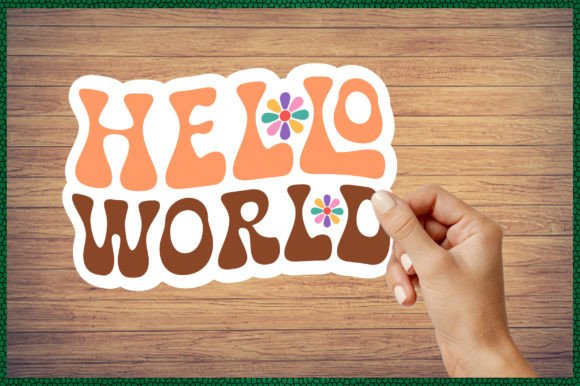
Reviewing Hello World Sticker Svg for Real Embroidery Projects
As a designer who spends more time staring at stitch simulations than most people care to admit, I approach every new digital embroidery file with a mix of curiosity and skepticism. We have all downloaded a "cute" graphic only to realize it turns into a bird's nest of thread once the machine starts running. Recently, I pulled the Hello World Sticker Svg from my library to evaluate its potential for actual production work. This isn't just about whether the image looks good on a screen; it is about how that design translates into a tangible handmade product that a customer will wear, wash, and cherish.
The first thing that strikes me about this asset is its inherent versatility. The title suggests a "sticker" aesthetic, which usually implies bold outlines, clean shapes, and a slightly playful or retro vibe. In the world of Crafts and Graphics, this style is incredibly popular right now, especially for boutique branding and modern nursery decor. When I opened the zip file, I found the expected variety: SVG, EPS, DXF, and PNG formats. For us embroidery folks, the SVG and DXF files are the gateways. They allow us to import the vector paths into our digitizing software to create a proper machine embroidery design.
Visual Personality and Project Fit
The mood of the Hello World Sticker Svg is welcoming and fresh. It carries that classic "new beginning" energy, making it a natural fit for baby announcements, new shop launches, or introductory gifts. Visually, the layout feels balanced. If you are planning to use this for a tote bag design or a sweatshirt embroidery project, the composition holds up well. It doesn't feel too cluttered, which is crucial when you are working with thread. Unlike complex illustrations that require thousands of stitches and multiple color changes, a sticker-style graphic often relies on strong silhouettes. This means you can likely achieve great results with standard fill stitch techniques for the body and a crisp satin stitch border to mimic that die-cut sticker look.
I immediately started imagining this on a structured canvas tote. The boldness of the design would pop against a natural or black fabric background. It also feels appropriate for baby embroidery. A onesie or a receiving blanket featuring this motif makes for a thoughtful personalized gift. The simplicity ensures that even on smaller garments, the text remains legible, provided the digitizing is handled correctly.
Real-World Application: The Boutique Launch Scenario
Let's walk through a realistic scenario. Imagine a client runs a small online shop selling eco-friendly apparel. They need a signature patch to sew onto their denim jackets or a direct print alternative using embroidery. The Hello World Sticker Svg serves as an excellent base for an embroidered patch. Because the design is self-contained, it works perfectly within a 4x4 or 5x7 hoop size, depending on how much negative space you want around the edges.
In this context, the finished product needs to look professional. Customers judge quality by the cleanliness of the stitches and the durability of the item. If I were producing this for a craft business, I would focus heavily on the underlay. Since sticker designs often have solid areas, a robust underlay is necessary to prevent the fabric from peeking through and to support the top stitching. For a custom apparel line, consistency is key. Using this graphic across different products—like aprons, pillow covers, or even tech accessories—creates a cohesive brand identity. It acts as a visual anchor that says, "We are new, we are fresh, and we are ready."
Technical Considerations and Fabric Challenges
However, enthusiasm must be tempered with technical reality. Not every fabric plays nice with every design. When working with the Hello World Sticker Svg, you need to be mindful of fabric texture. On a fluffy towel or a textured knit, fine details can get lost. If your version of this design includes tiny lettering or intricate corners, those areas might become muddy on high-pile fabrics. In such cases, increasing the stitch density slightly or choosing a smoother fabric like twill or broadcloth is advisable.
Stretchy fabrics present another hurdle. If you are applying this to a fitted t-shirt or a stretchy baby gown, the stability of the design is paramount. Without the right stabilizer, the stitches can pucker or distort after washing. I always recommend testing on scrap fabric first. Cut a piece of the actual material you intend to use, hoop it with your chosen stabilizer (cut-away is usually safer for stretchy items), and run a test stitch-out. This simple step saves hours of frustration and prevents ruining expensive blanks.
Dark fabrics require special attention to thread choice. The original SVG might be black or white, but in embroidery, contrast is king. If stitching on navy or black, ensure your thread colors are vibrant enough to stand out. You might also need to adjust the satin stitch columns to ensure they cover the dark background completely without gaps.
Commercial Viability for Etsy Sellers and Makers
For the Etsy seller or creative entrepreneur, the value of a design lies not just in its beauty but in its marketability. Does this design sell? The "Hello World" theme is evergreen, particularly in the tech-meets-craft niche and the baby sector. It appeals to new parents, coding bootcamps, and startups alike. As a design asset, it offers high utility. You can use it to create printable mockup images for your shop before you even stitch a single thread, helping you gauge customer interest.
When listing this as part of your small shop product lineup, clarity in your presentation builds trust. Show close-ups of the stitch quality. Mention the type of thread used and the fabric composition. Buyers of holiday embroidery or wedding gifts want to know that the item will last. A well-executed version of this design signals professionalism. It shows that you care about the details, from the tension of the bobbin thread to the trimming of jump stitches.
Final Designer Notes and Best Practices
Before you commit to a full production run, keep these practical tips in mind:
- Check Licensing: Always verify the license terms included in the zip file. Ensure you have the rights to use the design for commercial projects if you plan to sell finished items.
- Digitize with Care: Since the source files are vectors (SVG, EPS, DXF), you have control over the digitizing process. Don't just auto-digitize. Manually set stitch angles to follow the shape of the "sticker" for a more organic look.
- Test Contrast: View your design in black and white mode in your software. If the elements blend together, you may need to adjust spacing or add outlining.
- Mind the Hoop: Confirm that the design fits your available hoop sizes, especially if you are working on curved surfaces like caps or small baby socks.
- Wash Testing: For any item meant to be washed frequently, like a kitchen towel or child's clothing, wash the test sample multiple times to check for fraying or color bleeding.
The Hello World Sticker Svg is a solid contender for your library. It bridges the gap between digital graphics and tactile embroidery beautifully. With the right preparation, attention to fabric texture, and careful digitizing, it can elevate a simple piece of cloth into a memorable personalized gift or a standout item in your commercial embroidery catalog. It reminds us that sometimes, the simplest messages, stitched with precision, make the loudest impact.