Reviewing Hope You Love Your Purchase for Embroidery
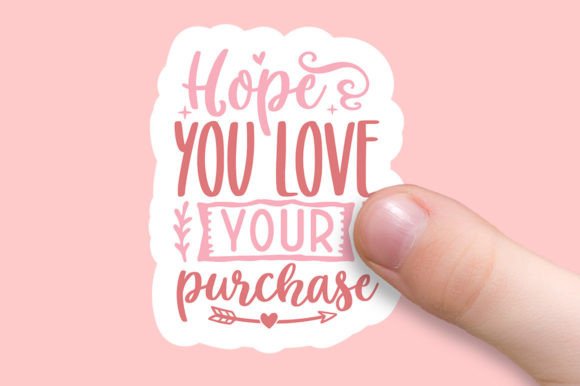
As a designer who spends more time staring at stitch maps than most people spend watching television, I approach every new embroidery file with a mix of optimism and skepticism. When I first encountered the Hope You Love Your Purchase design, my initial reaction was grounded in its intended category of Crafts and Graphics. It presents itself as a Valentine SVG Sticker, optimized for cutting machines like Cricut and Silhouette. However, my job is to look past the vector lines and imagine how this sentiment translates when rendered in thread. Does the phrase hold up under the needle? Can it transition from a digital asset to a tangible, high-quality handmade product? This review breaks down the practical reality of using this design for real-world embroidery projects.
The Visual Personality and Mood
The phrase "Hope You Love Your Purchase" carries a specific weight. In a retail context, it is often a sterile, automated message found on a receipt. But in the world of small business and handmade goods, it transforms into a personal bridge between the maker and the buyer. Visually, this design relies heavily on typography. For an embroidery adaptation, the mood needs to be warm and inviting, not corporate. If you are digitizing this or adapting an existing graphic, the font choice is critical. A heavy, blocky serif might feel too industrial, while a delicate script could get lost in the texture of the fabric. The ideal execution balances readability with a touch of whimsy, fitting perfectly for boutique branding or a thoughtful personalized gift.
When evaluating the layout, one must consider the flow of the letters. In a machine embroidery design, sharp corners and tiny serifs are the enemies of clean stitching. If the original graphic features intricate swashes or very thin lines, these will need significant adjustment to work as a satin stitch or a tight fill stitch. The visual personality should scream "crafted with care," reinforcing the value of the item it is attached to.
Real-World Application: The Boutique Unboxing
Let's walk through a realistic scenario where this design shines. Imagine you run a small online shop selling organic cotton tote bags and linen aprons. You want to elevate your packaging game. Instead of a paper insert, you decide to embroider "Hope You Love Your Purchase" directly onto a fabric tag sewn into the seam of a tote bag design or on the hem of an apron. This turns a standard transaction into a memorable moment.
In this context, the design acts as a final signature. When a customer opens their package and sees those words stitched in contrasting thread against natural linen, it validates the price point. It suggests that a human hand touched the item, distinguishing it from mass-produced goods. This application works exceptionally well for Etsy sellers looking to build brand loyalty. It is not just a label; it is a promise of quality. Similarly, this could be applied to the inside collar of a sweatshirt embroidery project, offering a subtle surprise for the wearer that feels exclusive and intimate.
Versatility Across Products
While the original product description highlights stickers and mugs, the potential for custom apparel and home goods is vast. Here is how the design performs across different mediums:
- Baby Items: Stitched onto a burp cloth or the footie of a onesie, the message becomes a sweet note from the maker to the new parents. For baby embroidery, ensure the thread is soft and the density is low to prevent irritation.
- Holiday Gifts: During the rush of holiday embroidery, adding this phrase to a kitchen towel or ornament box adds a professional touch that generic gifts lack.
- Patches: Creating an embroidered patch with this text allows customers to iron it onto jackets or bags, extending the life of the message beyond the original product.
- Stationery and Invitations: While originally a sticker concept, embroidering this onto heavy cardstock or fabric-covered journal covers creates a unique hybrid product.
Technical Considerations and Stitching Challenges
Transitioning a graphic meant for vinyl cutting into a viable digital embroidery file requires a keen eye for detail. The primary challenge with text-based designs like Hope You Love Your Purchase is legibility at smaller sizes. If you attempt to stitch this on a cap or a small pocket, the letter spacing (kerning) becomes critical. Threads spread; ink does not. What looks crisp on a screen may blob together on a textured fabric.
You must be cautious with stitch density. If the design is too dense, it can cause the fabric to pucker, especially on stretchy materials like t-shirts or thin linens. Conversely, if the density is too low, the backing fabric might show through, ruining the aesthetic. For dark fabrics, you may need to incorporate an underlay stitch or even a light-colored applique base to ensure the text pops without requiring excessive thread buildup.
Curved surfaces present another hurdle. Applying this to a structured cap requires careful hooping and potentially a foam topping to keep the stitches raised and clear. On layered garments, such as a hooded sweatshirt, you must account for the thickness. A standard hoop size might not accommodate the full phrase if the font is large, forcing you to break the design into two lines or reduce the scale, which risks making the text unreadable.
Designer Notes for Success
Before committing to a production run or a client order involving this design, adhere to these practical steps:
- Test on Scrap Fabric: Always stitch a sample on the exact material you intend to use. Fabric texture dramatically alters the outcome of text designs.
- Check Thread Contrast: Ensure your thread colors provide sufficient contrast against the background. A monochromatic look can be chic, but only if the stitch direction creates enough shadow and definition.
- Review Small Details: Zoom in on the digitized file. Are the dots on the "i"s secure? Are the connections between letters strong enough to withstand washing?
- Stabilizer Selection: Choose the right stabilizer for the job. Cut-away is usually safer for garments that will be washed frequently, while tear-away might suffice for decorative items.
- Licensing Verification: Since the source is a Valentine SVG intended for crafts, confirm the licensing terms before selling finished items commercially. Ensure you have the rights to use the design for commercial embroidery and not just personal hobby projects.
Impact on Brand and Customer Trust
Ultimately, the success of Hope You Love Your Purchase in an embroidery context comes down to perception. A well-executed stitch reinforces the narrative of quality. It tells the customer that you care about the finish as much as the function. In the competitive landscape of craft business, these details are what generate repeat buyers and positive reviews. A sloppy, puckered, or illegible version of this message can have the opposite effect, undermining the professionalism of your small shop product.
Whether you are creating a printable mockup for your online store or stitching the final finished product, the integrity of the design matters. It serves as a quiet ambassador for your brand. When done right, it bridges the gap between digital design assets and the tactile warmth of handmade goods. It reminds the recipient that behind every purchase is a person who hoped, quite sincerely, that they would love what they received.
In conclusion, while Hope You Love Your Purchase originates as a simple graphic for stickers and mugs, its potential in the embroidery world is significant. With careful attention to digitization, fabric choice, and stitching technique, it becomes a powerful tool for enhancing customer experience. It is a reminder that in the age of automation, the human touch—literally stitched into the fabric—is still the most valuable commodity we have.